
Choosing between a foldable bicycle and a mountain bike depends on where you plan to ride, how you store your bicycle and what type of cycling experience you want.
Both bicycle types have different strengths. A mountain bike is designed with features that make it suitable for uneven terrain and off-road riding, while a foldable bicycle focuses more on portability, convenience and everyday versatility.
For Singapore riders, the choice should be based on actual riding needs rather than simply comparing the appearance of the two bicycle styles.
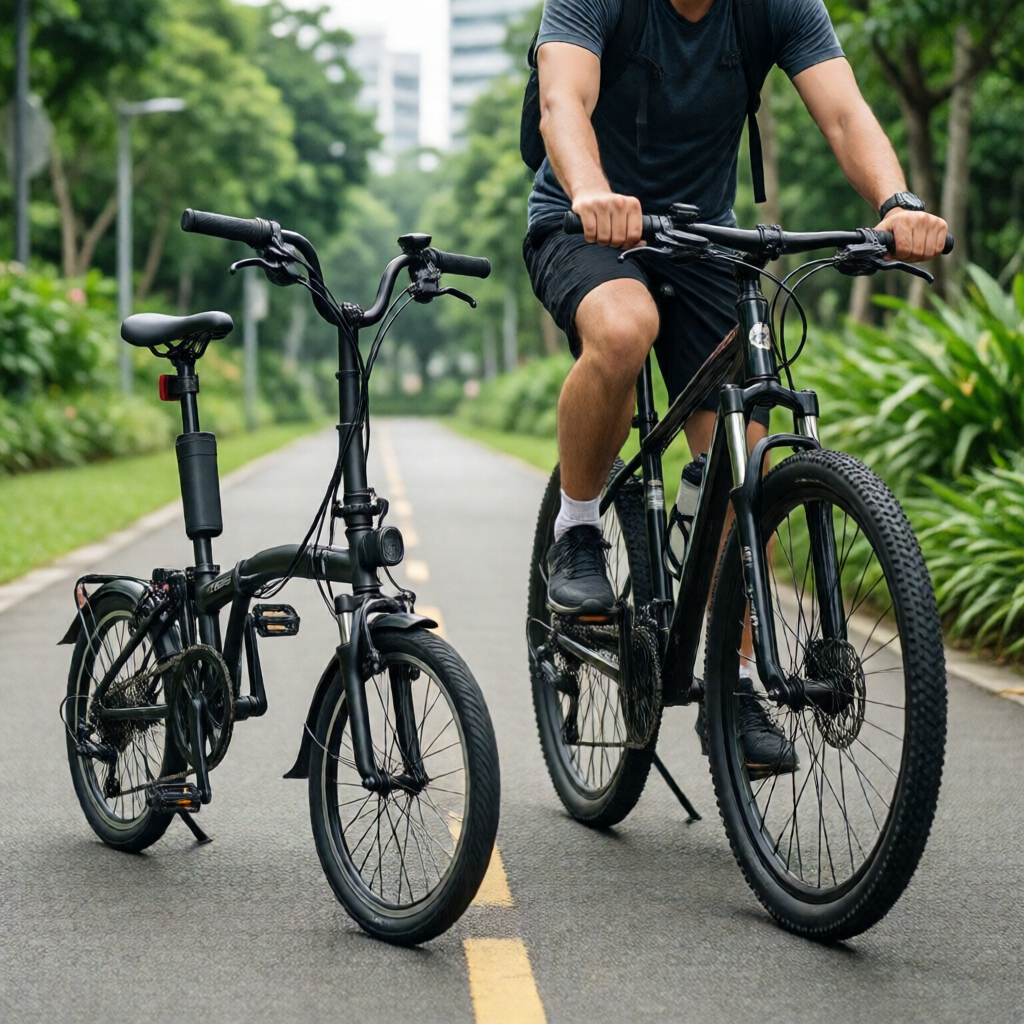
If you are considering a foldable bicycle Singapore option, understanding how it compares with a mountain bike can help you decide which design better matches your lifestyle.
Table of Contents
- Foldable Bicycle vs Mountain Bike at a Glance
- What Is a Foldable Bicycle?
- What Is a Mountain Bike?
- Comfort and Riding Position
- Urban Riding and Commuting
- Storage and Portability
- Handling Different Surfaces
- Long-Distance Recreational Riding
- Maintenance and Ownership
- Which Is Better for Beginners?
- Which Bicycle Is Right for You?
- Final Thoughts
1. Foldable Bicycle vs Mountain Bike at a Glance
The main difference between the two bicycles is their intended purpose.
A foldable bicycle is designed around convenience and versatility. Its folding mechanism allows the bicycle to become more compact for storage and transportation.
A mountain bike is designed primarily for riding on uneven surfaces and terrain where additional stability and control may be useful.
A simple comparison looks like this:
| Feature | Foldable Bicycle | Mountain Bike |
|---|---|---|
| Folding design | Yes | No |
| Storage | Very convenient | Requires more space |
| Portability | High | Lower |
| Urban commuting | Excellent | Suitable |
| Recreational cycling | Excellent | Excellent |
| Rough terrain | Depends on model | Generally better suited |
| Off-road riding | Limited depending on model | Designed for this purpose |
| Home storage | Easy | Requires more space |
| Everyday versatility | High | High |
Neither bicycle is automatically better. The best option depends on your intended use.
2. What Is a Foldable Bicycle?
A foldable bicycle is designed so that the bicycle can be folded into a more compact form when it is not being ridden.
This makes the design particularly useful for riders who have limited storage space or need to transport their bicycle regularly.
For Singapore residents, compact storage can be a major consideration.
A folding bicycle can be easier to keep at home, store in an office or move when cycling is only part of a larger journey.
When unfolded, a quality foldable bicycle can function like a normal bicycle for everyday riding.
Its main advantage is that the rider does not have to choose between cycling and convenient storage.
3. What Is a Mountain Bike?
A mountain bike is designed primarily for riding over uneven surfaces and more demanding terrain.
Mountain bikes commonly feature wider tyres, robust frames and components designed around stability and control.
Depending on the model, suspension can also help absorb impacts from uneven surfaces.
This makes mountain bikes attractive to riders who enjoy trails, rough paths and off-road cycling.
However, these features can also make a mountain bike less convenient for riders who prioritise compact storage and portability.
A mountain bike can be an excellent choice for recreational off-road cycling, but its strengths may not be necessary for someone whose cycling mainly takes place on paved urban routes.
4. Comfort and Riding Position
Comfort depends on the bicycle and the rider.
Many foldable bicycles provide a relatively upright riding position, which can be comfortable for everyday urban cycling.
Mountain bikes can also provide a comfortable position, but their setup is generally designed around control over varied terrain.
Your choice should therefore depend on how you plan to ride.
If most of your trips involve paved roads and everyday transportation, you may prefer the simplicity and upright position of a folding design.
If you regularly ride uneven surfaces, the geometry and equipment of a mountain bike may provide more suitable handling.
A test ride can help you determine which position feels more natural.
5. Urban Riding and Commuting
For urban commuting, a foldable bicycle can have several practical advantages.
Its compact design makes it easier to store when you reach your destination.
This can be particularly useful for riders who do not have a dedicated bicycle storage area.
A mountain bike can also be used for commuting, but it may take up more storage space.
If your daily routine involves carrying or moving the bicycle, the folding feature can become particularly valuable.
For example, a commuter may ride to work, fold the bicycle and store it during the day.
The ability to reduce the bicycle’s physical size can make ownership more convenient in an urban environment.
6. Storage and Portability
This is one of the clearest differences between the two bicycle types.
Mountain bikes are generally full-size bicycles and require an appropriate storage area.
A foldable bicycle in Singapore, on the other hand, can be folded when it is not being ridden.
This can be useful in homes with limited floor space.
It can also make the bicycle easier to move between locations.
For riders living in apartments, the ability to store the bicycle more compactly can be a major advantage.
Portability can also influence how often you use the bicycle.
A bicycle that is easy to store and transport may be more convenient to use regularly.
7. Handling Different Surfaces
Mountain bikes generally have an advantage when riding on rough or uneven terrain.
Their wider tyres and purpose-built components can provide additional control on surfaces where a typical urban bicycle may feel less comfortable.
A foldable bicycle is generally more suited to paved roads, cycling paths and normal urban surfaces.
However, not every folding bicycle is identical.
Some models may have features that allow them to handle a wider variety of surfaces.
The important point is to consider the actual model and manufacturer specifications rather than assuming that all folding bicycles have identical capabilities.
If most of your cycling takes place on paved surfaces, the additional off-road features of a mountain bike may not provide enough practical benefit to justify its larger size.
8. Long-Distance Recreational Riding
Both bicycles can be used for recreational rides.
A mountain bike may be preferable for riders who want to combine distance with trails or uneven terrain.
A foldable bicycle can be suitable for longer rides on paved routes when properly adjusted.
For longer rides, factors such as:
- Saddle comfort
- Riding position
- Gearing
- Tyre condition
- Bicycle fit
- Rider fitness
become important.
If your preferred routes are primarily paved, a folding bicycle can provide a good balance between riding capability and everyday convenience.
If your preferred routes regularly involve rough terrain, a mountain bike may be more appropriate.
9. Maintenance and Ownership
Both bicycle types require regular maintenance.
Tyres, brakes, drivetrain components and other moving parts should be checked regularly.
A mountain bike may have additional components depending on its design, particularly if it includes suspension systems or equipment intended for off-road use.
A folding bicycle has folding joints and mechanisms that should also be kept in good condition.
Before riding, make sure the folding components are properly secured.
The practical maintenance requirements depend on the specific bicycle, how often it is used and the conditions in which it is ridden.
Regular inspection can help identify issues before they become larger problems.
10. Which Is Better for Beginners?
A beginner should choose based on intended use rather than assuming one bicycle type is universally easier.
A foldable bicycle can be a strong choice for someone who wants a practical bicycle for:
- Commuting
- Short urban trips
- Errands
- Recreational cycling
- Easy storage
- Flexible transportation
A mountain bike may be more suitable for a beginner who specifically wants to explore trails or uneven terrain.
Think about where you expect to spend most of your riding time.
If you rarely ride off-road, purchasing a mountain bike primarily for its rugged appearance may not provide much practical benefit.
Similarly, if trail riding is your main interest, a folding commuter-style bicycle may not provide the features you need.
11. Which Bicycle Is Right for You?
A foldable bicycle may be the better option if you prioritise:
- Compact storage
- Easy transportation
- Urban commuting
- Everyday riding
- Flexible storage
- Multi-purpose use
- Convenience
A mountain bike may be more suitable if you prioritise:
- Trail riding
- Uneven surfaces
- Off-road recreation
- Additional stability on rough terrain
- Mountain-bike-style riding
Your storage situation should also be considered.
For people living in smaller homes, a folding design can solve a practical problem that has little to do with cycling performance.
On the other hand, riders with sufficient storage space who regularly explore trails may find the mountain bike’s specialised design more valuable.
12. Final Thoughts
The choice between a foldable bicycle and a mountain bike ultimately comes down to how you intend to ride.
Mountain bikes are designed for riders who want greater capability on rough and uneven terrain.
Foldable bicycles focus on convenience, portability and everyday versatility.
For many urban riders, the compact nature of a folding bicycle in Singapore can make it a practical choice for commuting, recreational cycling and everyday transportation.
Before buying, consider your usual routes, storage space, transportation needs and riding preferences.
If most of your cycling takes place on paved roads and you value a bicycle that is easy to store and transport, a foldable bicycle may be the more practical choice.
If your priority is off-road riding and rough terrain, a mountain bike may better match your needs.
The best bicycle is ultimately the one that fits your riding environment and lifestyle, rather than simply the one with the most specialised features.