
A folding bike is designed to make cycling more convenient, but riding is only one part of everyday bicycle ownership. In Singapore, cyclists may also need to carry their bicycle up stairs, bring it into a lift, move it through corridors or store it inside an HDB flat.
This is where the compact design of a folding bicycle can be particularly useful.
However, a folding bike can still be awkward to carry if it is heavy, poorly folded or difficult to grip. Learning how to fold, lift and transport your bicycle properly can make daily commuting much easier.
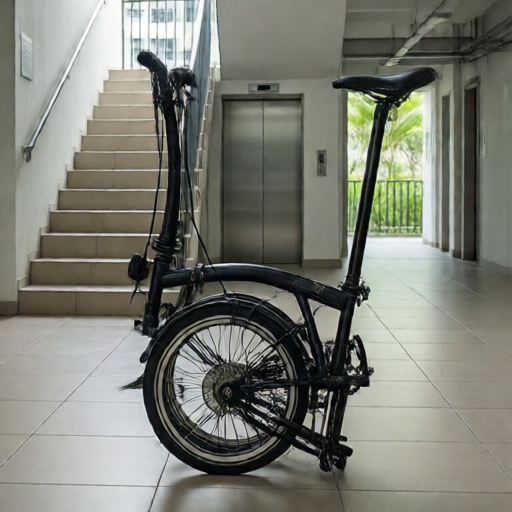
Whether you live in an HDB flat, work in an office building or regularly combine cycling with other forms of transport, these practical tips can help you handle your folding bike more comfortably.
Table of Contents
- Why Carrying Ability Matters
- Fold the Bike Correctly Before Carrying
- How to Carry a Folding Bike Up Stairs
- Carrying a Folding Bike Down Stairs
- Taking a Folding Bike Into a Lift
- Moving Through HDB Corridors
- Choosing a Folding Bike That Is Easy to Carry
- How Much Does Folding Bike Weight Matter?
- Protecting Your Bike While Carrying It
- Storing a Folding Bike at Home
- Common Carrying Mistakes to Avoid
- Final Thoughts
1. Why Carrying Ability Matters
One of the biggest advantages of a folding bicycle is its ability to become more compact.
This can make the bicycle easier to store and transport compared with a conventional full-size bicycle.
For Singapore residents, this can be especially practical when living in an apartment or HDB flat where storage space may be limited.
There may also be situations where riding is not possible or convenient.
You may need to:
- Carry the bike up a staircase
- Bring it into a lift
- Move it through a narrow corridor
- Carry it into your home
- Store it beside furniture
- Transport it between different locations
A folding bicycle should therefore be evaluated not only on how it rides but also on how manageable it is when folded.
2. Fold the Bike Correctly Before Carrying
Before lifting your folding bike, make sure it has been folded according to the manufacturer’s instructions.
Different folding bicycles use different folding mechanisms, so the exact sequence can vary.
Once folded, check that the frame, handlebar and other sections are securely positioned.
Do not assume that simply folding the frame means the bicycle is ready to be carried.
Make sure the locking mechanisms are properly engaged and that loose components will not swing unexpectedly.
If your bicycle has pedals, handlebars or other components that can move during transport, position them appropriately before lifting.
A properly folded bike should feel compact and controlled rather than loose or unstable.
3. How to Carry a Folding Bike Up Stairs
Carrying a folding bike upstairs requires careful handling because both the bicycle and rider are moving through a relatively narrow space.
Start by checking that the bike is securely folded.
Use a strong section of the frame as your primary lifting point rather than grabbing delicate components such as the derailleur, brake cables or wheels.
Keep the bicycle close to your body where possible.
This can make it easier to control the weight and reduce the chance of the bicycle hitting walls or railings.
If the bike feels too heavy to carry comfortably, do not rush. Take breaks where appropriate and use both hands if necessary.
For longer staircases, bicycle weight becomes particularly noticeable.
This is one reason why riders who regularly encounter stairs may want to consider the weight of a folding bicycle before purchasing it.
4. Carrying a Folding Bike Down Stairs
Moving a folding bicycle downstairs requires similar care but can feel more difficult because you need to maintain control while descending.
Keep a secure grip and move slowly.
Avoid carrying the bicycle in a position that blocks your view of the steps.
Your priority should be maintaining balance and seeing where you are placing your feet.
If the folded bicycle is bulky enough to interfere with your movement, reposition it before continuing.
For particularly narrow staircases, be aware of walls, handrails and other people using the stairs.
The compact size of a folding bicycle can help, but correct handling is still important.
5. Taking a Folding Bike Into a Lift
A folding bicycle can be convenient in buildings with lifts because it takes up less floor space when folded.
Before entering a lift, fold the bicycle securely and position it so that it does not obstruct the entrance or interfere with other passengers.
If the lift is crowded, it may be better to wait for another one rather than trying to squeeze the bicycle into a limited space.
Keep the folded bike under control and avoid allowing pedals, handlebars or other parts to protrude into the walking area.
When the lift reaches your destination, allow other passengers to exit before moving the bicycle out.
Simple consideration can make shared spaces more comfortable for everyone.
6. Moving Through HDB Corridors
HDB corridors can vary in width and may contain doors, railings, plants or other objects.
When carrying a folded bicycle, keep it as close to your body as practical and avoid allowing the wheels or handlebars to swing into the path of other people.
If you need to move the bicycle through a narrow area, check its folded dimensions beforehand.
This is another reason why the folded size of a bicycle can be just as important as its unfolded dimensions.
A bicycle that folds into a compact package can be much easier to handle in tight residential spaces.
7. Choosing a Folding Bike That Is Easy to Carry
If you expect to carry your bicycle regularly, look beyond the fact that it folds.
Consider the actual folded dimensions and weight.
Important characteristics include:
- Overall bicycle weight
- Folded size
- Frame shape
- Carrying points
- Folding mechanism
- Wheel position when folded
- Handlebar design
A bicycle with an awkward folded shape can be difficult to carry even if it is relatively light.
Ideally, you should be able to hold the folded bicycle securely without placing excessive pressure on sensitive components.
If possible, physically test the bicycle in its folded configuration before purchasing.
8. How Much Does Folding Bike Weight Matter?
Weight becomes increasingly important when carrying a bicycle over longer distances or up multiple floors.
A difference of several kilograms may not seem significant while riding, but it can become very noticeable when the entire bicycle needs to be lifted.
Consider your daily routine.
If your home has a lift and you rarely need to carry the bike, weight may be less important.
If you regularly use stairs, walk through buildings or carry the bicycle between locations, a lighter model may be more practical.
However, do not choose a bicycle based purely on minimum weight.
Frame strength, components, riding comfort and overall durability also matter.
The goal is to find a balance between portability and everyday riding performance.
9. Protecting Your Bike While Carrying It
Carrying a folding bike incorrectly can cause scratches or damage to components.
Avoid placing excessive pressure on the derailleur, brake components, cables or other vulnerable parts.
If you regularly carry the bicycle through buildings, consider whether a suitable carrying bag or protective cover would make sense for your situation.
A cover can also help prevent the bicycle from contacting walls or other surfaces during transportation.
Keep the folded bicycle clean, particularly if it has been used on wet or dirty roads before being brought indoors.
This can help prevent dirt and moisture from being transferred onto floors and household surfaces.
10. Storing a Folding Bike at Home
One of the main benefits of a folding bicycle is that it can often be stored in a smaller space than a conventional bicycle.
Before deciding where to store it, consider the folded dimensions.
A suitable storage location should not obstruct doors, walkways or emergency access routes.
Avoid placing heavy objects on top of the bicycle.
You should also store it in a reasonably dry environment and avoid unnecessary prolonged exposure to direct sunlight.
Regularly inspect the bicycle even when it is not being used frequently.
Check the tyres, chain, brakes and folding mechanism before your next ride.
11. Common Carrying Mistakes to Avoid
Several simple mistakes can make carrying a folding bike unnecessarily difficult.
One is lifting the bicycle by a component that was not designed to support its weight.
Another is carrying the bike before confirming that the folding mechanism is properly secured.
Some riders also focus entirely on the bicycle and forget about their own visibility and balance.
Avoid carrying the bicycle in a way that blocks your view of stairs or creates an unstable posture.
Finally, do not assume that every folding bicycle is equally easy to carry.
Folded dimensions, frame design and weight can differ significantly between models.
12. Final Thoughts
A folding bicycle can be especially practical for Singapore’s apartment-based urban lifestyle because it can be made significantly more compact when not being ridden.
However, the real convenience of a folding bike depends on more than its ability to fold.
Weight, folded dimensions, frame design and carrying points all influence how easy the bicycle is to move through stairs, lifts, corridors and residential spaces.
If you regularly live or work in a building where you need to carry your bicycle, consider these factors before purchasing.
Practise folding and unfolding the bike until the process becomes familiar, and always make sure the folding mechanism is securely locked before carrying or riding.
With the right folding bicycle and proper handling technique, moving your bike around an HDB building can become a simple part of your daily routine rather than an inconvenience.