
Choosing a folding bike involves more than deciding on its frame size or whether it is easy to carry. The gearing system is another important specification that can affect how the bicycle performs on different roads and riding conditions.
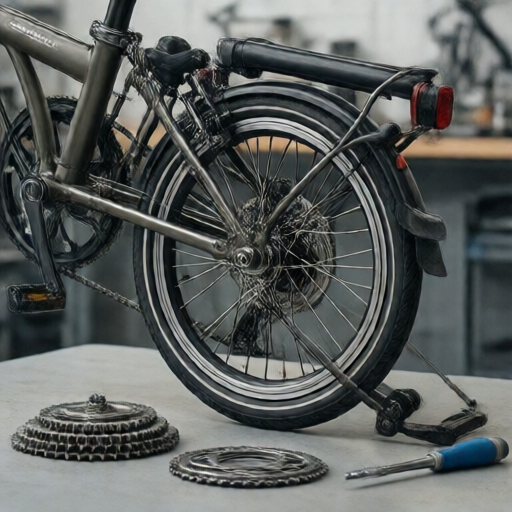
Some folding bikes have a single-speed setup, while others may have several gears. For a rider who mainly cycles around Singapore, understanding how bicycle gears work can make it easier to choose a bike that matches their daily route and riding style.
A higher number of gears does not automatically mean that a bicycle is better. What matters is how the gearing system works and whether it provides the range you actually need.
Table of Contents
- What Are Bicycle Gears?
- Why Do Folding Bikes Have Different Gear Options?
- Single-Speed vs Multi-Speed Folding Bikes
- Understanding Gear Ratios
- How Gears Help With Hills
- How Gears Affect Speed
- How Many Gears Do You Need?
- Gear Options for Singapore Commuters
- Common Gear-Shifting Mistakes
- How to Maintain Your Folding Bike Gears
- What to Consider Before Buying
- Final Thoughts
1. What Are Bicycle Gears?
Bicycle gears allow riders to adjust how much effort is required to turn the pedals.
A bicycle’s drivetrain typically includes components such as the chain, chainring, cassette or freewheel and derailleur, depending on the design.
When you select a lower gear, pedalling generally becomes easier, making it useful for climbing or starting from a stop.
A higher gear generally makes each pedal rotation move the bicycle farther, which can be useful when riding faster on flatter sections.
The purpose of having multiple gears is therefore to give the rider different pedalling options for different conditions.
2. Why Do Folding Bikes Have Different Gear Options?
Folding bicycles are designed for a wide range of uses.
Some riders use them for short trips around their neighbourhood, while others use them for longer commutes or recreational cycling.
Different routes can also have different requirements.
A rider travelling mostly on flat roads may not need the same gearing range as someone regularly cycling up slopes.
Singapore may not have mountainous terrain, but riders still encounter bridges, ramps, flyovers and gradual inclines.
Having suitable gearing can make these sections more manageable without requiring the rider to push as hard.
3. Single-Speed vs Multi-Speed Folding Bikes
Single-speed folding bikes have one primary gear ratio.
Their main advantage is simplicity. There are fewer shifting components, which can make the drivetrain straightforward to operate and maintain.
A single-speed bicycle can be suitable for riders who mainly travel short distances on relatively flat routes.
Multi-speed folding bikes provide several gear ratios.
The rider can shift between them depending on the terrain and desired pedalling effort.
This flexibility can be useful for commuters who encounter different road conditions during a journey.
The choice between single-speed and multi-speed ultimately depends on how and where you intend to ride.
4. Understanding Gear Ratios
Gear ratios can sound complicated, but the basic idea is relatively simple.
The relationship between the front chainring and rear sprocket determines how far the bicycle travels for each rotation of the pedals.
A larger gear ratio generally makes it easier to maintain higher speeds, but it requires more effort to turn the pedals.
A smaller gear ratio makes pedalling easier but results in less distance travelled per pedal revolution.
This is why cyclists shift into lower gears when climbing and higher gears when travelling quickly on flatter roads.
The number of gears alone does not tell you everything about a bicycle’s gearing performance.
Two folding bikes can both have seven gears but provide different gear ranges depending on their chainring and sprocket sizes.
5. How Gears Help With Hills
One of the biggest benefits of having multiple gears is the ability to make climbs easier.
When approaching an incline, shifting to a lower gear allows the rider to pedal with less resistance.
You may need to pedal more frequently, but each pedal stroke requires less force.
This can be particularly helpful when carrying a bag or travelling longer distances.
It is generally better to shift into an easier gear before the climb becomes too difficult rather than waiting until you are already struggling.
Learning to anticipate changes in terrain can make gear shifting smoother and reduce unnecessary strain on the drivetrain.
6. How Gears Affect Speed
Gears also help riders maintain a comfortable pedalling rhythm at different speeds.
On a flat road, a rider may find that a higher gear allows them to travel efficiently without spinning the pedals excessively quickly.
However, selecting the highest available gear is not always the best option.
If the gear is too high, the rider may need to apply excessive force to the pedals.
A comfortable gear allows you to maintain a consistent cadence without unnecessarily tiring your legs.
The ideal gear therefore depends on your speed, terrain and personal riding preference.
7. How Many Gears Do You Need?
There is no universal number of gears that every folding bike should have.
A simple single-speed setup may be enough for short, mostly flat journeys.
A folding bike with several gears may be more suitable for riders who regularly encounter slopes or want greater flexibility.
When comparing bicycles, consider the gear range rather than focusing only on the number printed in the specification.
For example, a bicycle with fewer gears can potentially provide a useful range if its gear ratios are appropriately selected.
Conversely, having many closely spaced gears does not necessarily provide a major advantage for a casual urban rider.
Think about your actual routes and riding habits before deciding.
8. Gear Options for Singapore Commuters
For everyday Singapore cycling, gearing requirements can vary considerably.
A rider travelling short distances on relatively flat roads may prefer a simple drivetrain.
Someone commuting across different parts of Singapore may encounter more varied terrain and benefit from a wider range of gears.
Consider your typical route:
- Is it mostly flat?
- Does it include bridges or ramps?
- Do you regularly carry a backpack or other load?
- Are your journeys short or long?
- Do you ride mainly for commuting or recreation?
- Do you prefer easier pedalling or higher-speed riding?
Answering these questions can help you determine whether a simple or multi-speed folding bicycle is more appropriate.
9. Common Gear-Shifting Mistakes
New cyclists sometimes wait too long before changing gears.
For example, approaching a slope in a high gear can make pedalling unnecessarily difficult.
Another common mistake is shifting repeatedly without allowing the drivetrain to settle.
Try to anticipate changes in terrain and shift progressively.
It is also useful to avoid forcing the pedals excessively while shifting gears.
Smooth pedalling can help the chain and shifting components move between gears more effectively.
With practice, changing gears becomes a natural part of riding rather than something that requires conscious attention.
10. How to Maintain Your Folding Bike Gears
A folding bike’s gearing system requires regular attention to remain reliable.
Keep the drivetrain reasonably clean and make sure the chain is appropriately lubricated according to the bicycle manufacturer’s recommendations.
Pay attention to signs such as:
- Difficulty shifting
- Skipping gears
- Unusual drivetrain noises
- A loose or damaged chain
- Slow or inconsistent shifting
If shifting problems continue after basic maintenance, the derailleur, cables or other drivetrain components may need professional adjustment.
Because folding bicycles are frequently folded and unfolded, it is also useful to make sure that the drivetrain and other components are not being accidentally damaged during the folding process.
11. What to Consider Before Buying
When comparing folding bicycles, look beyond the number of gears.
Consider the overall gearing range, drivetrain quality, bicycle weight and intended use.
A commuter who rides mostly flat roads may not benefit significantly from a very complicated gearing system.
On the other hand, riders who travel longer distances or regularly encounter inclines may appreciate having more gear options.
Also consider how comfortable you are with maintaining a multi-speed drivetrain.
A simpler system may be attractive to someone who prioritises ease of use, while an experienced cyclist may prefer greater control over gearing.
The best choice is the one that matches your actual riding needs.
12. Final Thoughts
Folding bike gears are an important specification, but the number of gears should not be the only factor you consider when choosing a bicycle.
Single-speed bikes can be simple and practical for suitable routes, while multi-speed folding bikes offer greater flexibility when riding across different terrain.
Understanding gear ratios can help you choose an appropriate gear for climbs, flat roads and different riding speeds.
For Singapore riders, the right gearing depends largely on your commuting distance, route, cargo and personal riding preferences.
Instead of asking whether a folding bike has “enough gears”, consider whether its gear range is suitable for the way you actually ride.
A well-matched gearing system can make your folding bike easier to ride, more comfortable for longer journeys and better suited to your everyday cycling needs.